This is your very first post. Click the Edit link to modify or delete it, or start a new post. If you like, use this post to tell readers why you started this blog and what you plan to do with it.
This is your very first post. Click the Edit link to modify or delete it, or start a new post. If you like, use this post to tell readers why you started this blog and what you plan to do with it.
Four of the underappreciated ’70s punks albums are better than nothing.
Stream Albums
By
2026-10-19

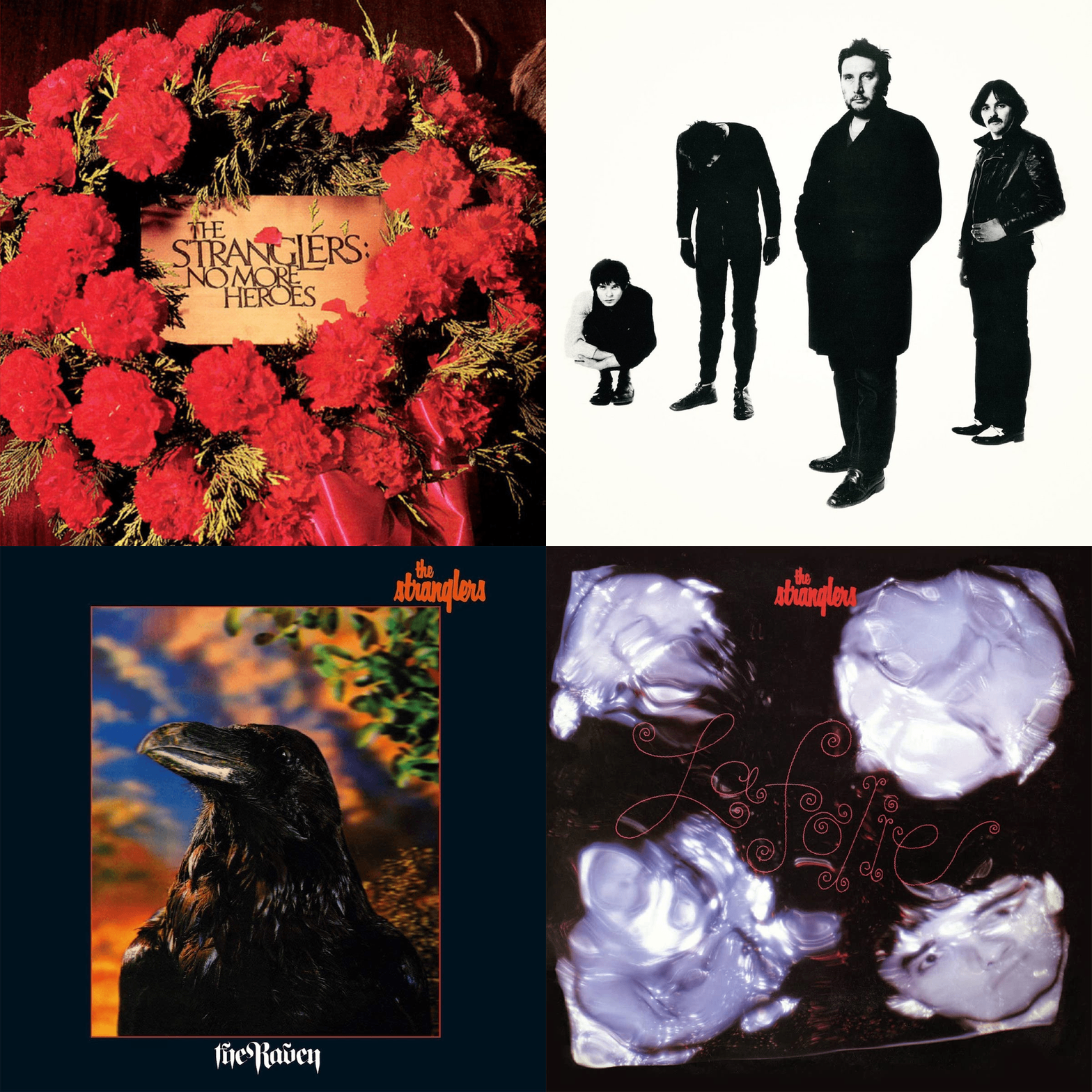
With their blend of propulsively groovy art-school punk and testosterone-fueled aggression, they were tougher than The Clash, nastier than The Sex Pistols, smarter than The Damned and wrote better songs than most of them — but they always get short-shrift when it’s punk nostalgia time. This new remastered slate of early albums is a typical example: You get their second, third, fourth and sixth albums, bypassing both their flawless ’77 debut Rattus Norvegicus and their weirdly unforgettable ’81 UFO-themed, heroin-fuelled concept album Meninblack. And the rarities on the discs are mostly singles (Bear Cage, Straighten Out) and B-sides any fan already has. Still, you can’t gripe about the albums themselves: The fiery 1977 offering No More Heroes is top-loaded with classics like Bitching, Bring On The Nubiles and Burning Up Time; ’78’s darker Black & White has the one-two punch of Tank and Nice N’ Sleazy; 1979’s breakthrough The Raven expands their repertoire with Nuclear Device, Duchess and Baroque Bordello; and the comparatively mellow La Folie (a concept album about romance) features the shockingly pretty Golden Brown, a heroin ode that became their biggest hit. Until somebody puts out the definitive box set, these will have to do. Still, they’ll do nicely.
Stream Punk Rock

Posted at 16:01 in Events, Harpenden
He’ll undoubtedly hate the comparison, but there’s definitely something of the Billy Mack about former Stranglers frontman Hugh Cornwell; although it’s the dry sense of humour with a generous slug of sarcasm, rather than any tendency to wear skintight leather like Bill Nighy’s aging Love Actually rock icon.
An initial request for clarification about Never Say Goodbye, the show coming to Harpenden’s Eric Morecambe Centre billed as his ‘Final Solo Acoustic Tour’, met with a typically acerbic response.
“Yeah, it is what it is, Matt. It is what it says it is. It’s the final acoustic tour. Acoustic meaning me with an acoustic guitar and my voice. You got it? Sorry, I thought it was clear because it was in English.
“So many people aren’t getting it. They’re going, ‘But does that mean you’re not performing anymore?’ I said, ‘Can’t you read English?’ Maybe it’s so unbelievable that people are just in shock?”
But despite that somewhat critical introduction, it’s hard not to warm to Hugh, arguably one of the UK’s greatest living songwriters, as not only is he genuinely funny, but his delivery reminds us that one of punk’s premier performers definitely still has some bite.
He explains why he’s calling time on the one-man-and-a-guitar gig: “It’s about 15 years since I did my last acoustic tour, and it takes a lot out of you, which is something people don’t quite realise unless they play guitar.
“There’s a big difference between getting a sound out of an acoustic guitar and getting a sound out of an electric guitar. With electric, you just plug it into an amplifier and pluck the string, with an acoustic it really depends on the physicality – how much sound you get out of it depends on how hard you hit it.
“So it’s quite physically demanding doing a two hour show where you’ve got to pound the shit out of the box, and I’m not getting any younger. I also much more enjoy playing with other people on stage because you’ve got a connection, whereas when you’re by yourself it does set up this antagonism between you and the audience, which puts you on the defensive a bit.”
Does he feel he builds on that rather confrontational relationship by offering himself as a sacrificial lamb to an audience Q&A at the end of the show? “No that’s going to be fun. I’ve never shirked away from answering questions and that’s just a way to make it more interesting you know?
“Not that I’m going to be bored, because I’ve picked songs that I like playing acoustically because they’re fun to play. Some are more interesting than others, Peaches isn’t very interesting as an acoustic number because nothing happens, so I might as well read a poem, so that’s why I’m not doing it.
“I’ve looked across the Stranglers’ catalogue and my solo catalogue to make it as enjoyable as possible, and I’ve managed to find a couple of new old ones – so to speak – that work.
“I never thought Dead Loss Angeles from the [Stranglers] album The Raven would work acoustically, but it does and I love playing it. So who knows, Never Say Goodbye right, maybe it won’t be, but my feeling before I go into this is that I’m sort of done with acoustic shows.
“Another thing that makes me uncomfortable is that as soon as you see someone with a guitar alone on stage, like Ed Sheeran, you immediately think singer-songwriter, and I don’t like the implications of that. I don’t want to be a singer-songwriter because I feel I’m more than that, it’s a bit limiting.”

Unlike many artists who break away from the band that first brought them fame, refusing to play any of their songs to avoid looking backwards, Hugh has now fully embraced his Stranglers era, including much of the group’s material on his set lists (although this acceptance wasn’t always the case during the early years of his solo career).
“They are my songs, so I don’t want to disown them, just because I’m not in the band anymore,” he explains.
“But I think I’ve embraced it a bit too much, actually, because people tend to dismiss the fact that I haven’t played with them for over 30 years and still consider me one of the band, which is totally wrong and doesn’t do me any favours at all.
“So maybe I should play less, maybe I should try and ignore the old catalogue and pretend The Stranglers don’t exist anymore? But then we’re in a modern world where Golden Brown has been rediscovered and reinvented, so it would be very difficult to do that, especially as it has been very financially helpful to me for it to be that popular!”
Hugh’s obviously got no intention of abandoning his Stranglers roots, especially with his next studio album Succubus coming out a few months after the 50th anniversary of their first LP Rattus Norvegicus next year.
“Talk about trying to get away from it and not being able to! Who knows, I might even do a whole set of Stranglers at a festival if they pay me enough money… If there’s a time to celebrate then it’s next year. I can’t imagine another 50 years going by and still being out there doing it, or being above ground actually!”
(For the uninitiated, The Stranglers’ back catalogue includes such seminal classics as No More Heroes, Duchess, Strange Little Girl, Hanging Around, Always The Sun and Something Better Change. Well worth checking out on your favourite streaming service…)
Hugh continues waxing lyrical about their hits: “It’s a good catalogue of songs. It’s one of the best catalogue of songs ever written. [Music producer] Pete Waterman of Stock Aiken Waterman compared The Stranglers to The Beatles.”
The music mogul actually told The Guardian newspaper that “there were two great British pop bands: The Beatles and The Stranglers”, which is high praise indeed.
“It’s a great catalogue,” he continues, “Long may it last, and may many people continue to enjoy listening to it and discovering it if they didn’t know it before.”
Does he listen to any contemporary music?
“No, I don’t have the time or the inclination. I remember about five or six years ago thinking, ‘I haven’t listened to any music for a long time, so maybe I should try and listen to some’. I went to a cabinet of CDs and started looking through them, but I couldn’t decide what to listen to. An hour went by and I still hadn’t made a decision, so I thought, ‘Well that’s a waste of time, I was better off before’. So who needs to listen to music?
“I’m always writing or rehearsing or playing songs or thinking about new ones. What happens nowadays is a tune comes into my head and I suddenly realise it’s one of my old songs, so I steer myself away from new music because what’s the point? I’m entertaining myself, and that’s all I’ve been doing for the last 50 years, and quite by coincidence, a few other people have enjoyed it as well.”
It’s this droll sardonism which is reflected in many of his songs: “Really when you’re writing a song, painting a painting or writing a book or something, it should be as close a portrait of yourself as it is of what you’re trying to capture. I can’t think of anyone who is not true to themselves when they’re doing something artistic, you can’t help it. I can’t imagine trying to do it duplicitously. It would be counterproductive, I think.”
Away from his musical work, Hugh has also written six books, including autobiographical works and a selection of novels, which he agrees was a natural progression from writing songs.
“I’ve always liked words; what you can do with them and the power of them. I’d really like to write a movie, and a movie writer once told me that the best way to get into screenwriting is to write a book, so I’ve been trying to do that ever since.”
Perhaps foolishly, I said it was a shock to learn that he also wrote books: “That should have been a surprise, not a shock. A shock sounds like something unpleasant.”
Apologies, it was a pleasant surprise, but that aside, what is the inspiration for his fiction work?
“When I’m writing, I’m always trying to emulate the people whose work I admire. I thought, God I really like a good thriller, so my first novel was a thriller, and for the next one I wanted to find out how I felt about religion, so I wrote a book about a thinker. I really like a good western, and they’re sort of out of fashion, so I’ve just written a noir western, set in 1870 America.”
His devil-may-care attitude to writing books is reflected in his approach to songs, as he often goes into the studio with unfinished material to work through.
“Yeah, that’s a bit of a gamble, isn’t it? It’s precarious, it’s a bit of a rollercoaster, but it’s good fun.
“I went into the studio with a vague idea for the title track for Succubus, and after the first day I came out and listened to what we’d done. I thought, ‘What am I going to make out of this? Jesus Christ, where’s this going?’ It took about six months to finish it, whereas another song was done and dusted in two days. It doesn’t mean it’s any worse or any better, that’s just what happens.”
As we wind up our conversation, he elaborates on the themes of the new album: “A succubus is a woman who appears in your dreams and seduces you. The opposite version is an incubus, the men that appear in women’s dreams. There’s nothing you can do about it really, they just appear.
“I love the word, and I thought it would conjure up a very interesting, mysterious and curious thing that people might be inquisitive about. So obviously the title song is about that subject, but I don’t know how much of the rest of it relates.
“There’s a couple of songs about women that I’ve had relationships with that have been good and bad in there as well. There’s some contemplation about getting close to the end of your life, some memories, a bit of different things, really. It’s been an interesting journey, it really has.
“But I don’t really see it as a combined thing, I just think of things in isolation because each one is an experience I’ve had, I don’t really look back and think about it all together.”
Hugh is coming to the Eric Morecambe Centre on November 20. Tickets are available here.

10th October


By Jamie BowmanAudience & Content Editor
IT’S 50 years now since The Stranglers first entered the public’s consciousness, their sneering aggressiveness and no-compromise attitude chiming well with a movement that their idiosyncratic approach and musical chops saw them quickly outlive.
Fronting the band throughout their glory years was singular songwriter Hugh Cornwell, who with his degree in biochemistry, growling vocals and enough misanthropy to out-grump the Grinch on a rainy Monday morning, wrote such punk masterpieces as Hanging Around, No More Heroes and Peaches before penning 80s pop classics Always the Sun, Skin Deep and Golden Brown.
Cornwell, now aged 77, left The Stranglers in 1990, embarking on a solo career that has led to ten albums of critically acclaimed songs, culminating in 2022’s Moments of Madness and next year’s Succubus while this autumn sees him setting out on a rare acoustic tour which calls into New Brighton’s Floral Pavilion in November.
„It takes a lot out of you doing acoustic shows,“ says Cornwell. „It’s physically demanding because unlike an electric guitar you actually have to bloody hit it to get a sound out of it!
„Pounding away to get the rhythm is very tiring and although it’s very satisfying it’s a lot easier to do electric shows.
„But Kilimanjaro is there and you want to climb it and I haven’t done one for a long time and it takes up less brain space preparing for one and now I’ve got that space preparing for my new album which is a lot of work.
„I don’t even get the acoustic out of the box most of the time as I’ve got lots of electric guitars lying around and they’re just easier to pick up.
„When I record I’m always thinking about an electric recording or a band recording and if you pick up an acoustic guitar you’re immediately limiting the scope and as soon as you start strumming it defines the song.
„I want to be unlimited when I’m writing a song!“

Hugh Cornwell (Image: Kevin Nixon)
As well as dipping into both The Stranglers’ and his own wealthy catalogue of songs on the forthcoming tour, Cornwell will be performing new songs from his next studio album, Succubus, with these tunes being heard for the first time at these dates. A Succubus, by the way, is a female demon or supernatural entity from medieval folklore that appears in the dreams of sleeping men to seduce them and engage in sexual activity.
„Succubus derives from Latin rather like the Stranglers’ debut album Rattus Norvegicus which is a weird coincidence as next year is the 50th anniversary of that coming out,“ says Cornwell. „When I make an album I like to bang a nail in the wall to start with and that might be a concept.
„There are couple of songs on there about past relationships I’ve had but the girls you dream about are relationships too in a funny sort of way.
„I can site an example that happened to me when I dreamt of a young woman and a few years later I met the girl in the dream – she was German and I had dreamt about meeting her years before – how weird is that? The power of dreams and the mind is something we just don’t know the extent of and so the album is a celebration of that and also coming to terms with advancing years.
„There’s one song called Kensal Green which is one of the largest cemeteries in London and that’s probably where I’ll end up. I go there whenever a friend or relative dies and we all end up there – it’s one of the things I’m thinking about on this album.“
With musicians like Paul McCartney, Bob Dylan and Mick Jagger now all still touring and recording into their 80s, mortality has become a common thread for stars who once seemed to epitomise the youthful exuberance and rebellion of rock n roll with Cornwell no different.
„It’s something that happens,“ he muses. „As you get older your thoughts become more concerned with staying alive and the looming question of how much longer you’ve got.
„Dylan did it on Not Dark Yet which I thought was a fabulous song and that was about 20 years ago! It can be very cathartic – it’s like going to some guru and saying ‘this is what’s troubling me’ and you get it off your chest and feel better.
„Songwriters are lucky in that respect that we have that way of dealing with stuff that people who can’t write songs don’t have.“
One thing Cornwell probably won’t need to worry about too much is money after The Stranglers’ 1982 hit Golden Brown became a massive streaming hit in 2025, powered by its popularity with TikTok users and even entering the UK Spotify Top 200.
„As it should be!“ laughs Cornwell. „I know someone had slowed it down and suddenly it became discovered – any more than that I do not know!
„It’s remarkable but that song has a magic about it. It had something about it and it wasn’t just the weird time signature or the harpsichord, it’s just got something that makes it very special.
„The only person I know who didn’t pick up on that was Jean-Jacques Burnel (The Stranglers bassist, who today still leads the band). We played it to him and he said ‘it’s s***’ and now he’s reaping the benefits quite paradoxically.
„I love playing it and have always loved singing it. It’s a lovely song for a singer to sing.
„It was so different it was subversive – the Stranglers were a wolf in sheep’s clothing getting to the top of the charts, or at least number two as it was kept off the top by Tight Fit’s The Lion Sleeps Tonight!
„I’m very proud to have taken part in writing it but really it was Dave Greenfield (The Stranglers keyboardist who died in 2020). It was his big contribution to modern music and he came up with all the bits before I shaped the song and came up with the lyrics and it’s what he should be remembered for. He’d be very happy and contented about it.
„If it helps people discover the other gems in the Stranglers’ catalogue and then maybe that I left a long time ago and have been creating music ever since all the better.
Ahead of Hugh Cornwell’s show in Newport this November, the Chronicle’s Tim Butters caught up with the former Stranglers frontman for a chat…..
By Tim Butters | Reporter |
Monday 12th October 2026
tim.butters@abergavennychronicle.com

„I want to keep pushing forward.” (Pic supplied )
FIFTY years in any job is a big ask; in the music industry it’s extremely rare. Making music and performing shows in your twenties and thirties is one thing. Doing it in your seventies is another.
It takes talent, tenacity and the songs to back it up.
Fortunately for The Stranglers’ former frontman, Hugh Cornwell has all three.
Songs like Golden Brown, Always The Sun, Peaches, No More Heroes and Skin Deep have seeped into popular culture.
You may not know who wrote or originally sang them, but you’ll probably recognise them, and chances are you can hum them too.
But the buck doesn’t stop in 1990 when Hugh left the group that made him famous.
For the last three decades, he’s refused to go down the reunion route and has earned a name for himself as a critically acclaimed solo artist.
He has ten solo albums under his belt and the most recent, Moments of Madness, has been described as a “late flowering classic” and a “modern-day masterpiece.”
Next year marks the 50th anniversary of The Stranglers’ debut Rattus Norvegicus.
Way back in 1977 those expecting a strictly spit and venom punky debut were thrown something of a curveball.
The Stranglers were always more than a one trick pony and had a lot more in their arsenal than three-chords and a couple of gobfuls of attitude.
A lot of water has passed under the bridge between the year that punk broke and now, but as Hugh, 77, told the Chronicle, “Time goes by so quickly. I sometimes wonder where the last 50 years went. I mean, I know where it went, but it does seem to pass in the blink of an eye. I just feel very fortunate that I’ve still got good health, and I can still play and sing, and still write songs. It’s a blessing.”
It’s also a blessing for fans of Hugh’s back catalogue who want to hear time-honoured classics performed in a way they’ve never heard them before.
Hugh explained that the last time he did acoustic solo performances in the UK was in 2017.
And there’s a reason Hugh is hanging up his acoustic six-string after the current tour.
“Acoustic shows are a lot more demanding and challenging than being in a band because it’s just you up there on the stage and there’s nowhere to hide.”Explained Hugh.
“I don’t tend to pick up an acoustic guitar much these days, and I definitely don’t write songs on it. I much prefer just going into the studio and creating that way. I find just strumming an acoustic guitar can limit the direction of how a song can go, so it’s always an interesting but rewarding challenge for me to perform acoustically.”
Hugh added, “When you’re onstage with other people, and you’ve got your electric guitar and your pedals and effects, you’re a lot less exposed. It’s a lot easier to do electric shows on a physical level as well, because with an acoustic guitar you have to properly pound the strings to get a decent sound and keep the rhythm going.”
However, Hugh is quick to add, “Although it’s tough, it’s very satisfying when you get it right, and because I’m not sure how much longer I can continue to perform, this will be my final solo acoustic tour, but obviously, not my final tour ever.”
On the current tour, fans can expect to find a mixed bag of acoustic versions of classics from The Stranglers and a cherry-picked selection of standout tracks from Hugh’s solo career.
“I’ve never been one of those performers who refuse to sing the old songs.” Explained Hugh.
“A lot of the time it’s what the audience have paid to hear, and so who am I to disappoint them?
“Besides, I’m very proud of the work we did with The Stranglers, and the longevity of the songs speaks for themselves. Golden Brown in particular keeps seeming to find itself a new audience.”
Outside of its phoenix-like rise on TikTok, casual fans of The Stranglers may not be aware, but there is a Mariachi version of Golden Brown which you can find on YouTube.
Sung by Hugh and backed by the London-based mariachi band Mariachi Mexteca, the haunting ode to the dreamy lure of opiates has never sounded more joyful.
“It’s this version of Golden Brown that I’ll be doing acoustically,” Hugh explained to the Chronicle.
“It was an arrangement I didn’t really consider until we recorded it and it works surprisingly well.”
Although the author of an impressive back catalogue that includes more than its fair share of classic tunes, Hugh is not one to rest on his laurels.
“I’m very grateful for the shelf-life of some of those old Strangler songs because not only is it great that they’re still loved in their own right, but it helps encourage people to maybe listen to other songs I’ve done, and as an artist I want to keep pushing forward.”
With a new album, Succubus, and a documentary on his life ready to drop next year. Not to mention the 50th anniversary of Rattus Norvegicus, Hugh shows no sign of slowing down or letting up.
He explained, “As always, I’m excited about recording and performing new material, but I’m also excited about the forthcoming documentary because it covers the years I was studying to be a biochemist in Sweden right up until we formed The Stranglers and my solo career.
“There’s an interesting stranger than fiction story in there about how me and a few others indirectly got caught up with the bank robbery at Kreditbanken, which led to the notorious Stockholm syndrome expression, but you’ll have to wait for the documentary to be released to find out more.”
As for what he does best, you can check that out for yourself in the flesh when Hugh Cornwell performs an Intimate Evening of Songs, Stories and a Live Audience Q&A at Newport’s Riverfront Centre on Friday, November 6.
Tickets are available from www.newportlive.co.uk

The death of a 6ft 8in Cowes man remembered as a ‘gentle giant’ by legendary rock band The Stranglers is being investigated by the Coroner.
Alan James Robertson, of Worsley Road in Cowes, died at Southampton Hospital on 9th September after suffering an extensive intracranial haemorrhage following a fall.
The 67-year-old, who was born on 12th July 1959, was known to many as ‘Big Al’ and had a long association with The Stranglers, working as the band’s driver, security and ‘everything else guy’.
An inquest into his death was opened at the Isle of Wight Coroner’s Court yesterday (Wednesday) by Assistant Coroner Daren Samat.
The court heard that Alan died at 09:54 on 9th September, having been treated in the neurological unit at Southampton Hospital following the fall.
A post-mortem examination gave the medical cause of death as an intracranial haemorrhage, with liver cirrhosis, Type 2 diabetes and hypertension also recorded.
Following his death, The Stranglers paid tribute to the 6ft 8in man who had been part of their lives for many years.
The band said:
“Big Al was our driver, security and everything else guy for many years. A huge man at 6’8″, he was a gentle giant, with a warmth and kindness that was infectious, and he looked after us like a shepherd tending his flock, with great care and love.
“He was a tremendous guy in every regard, and he’ll be greatly missed by us all.”

By Bridget GaltonFeatures Editor and Associate Editor

The Hope & Anchor in Islington, where acts including Dire Straits, The Clash, Madness, and U2 performed early gigs, has been put up for tenancy by pub company Greene King.
It was built in 1880, but back in the 1970s the Upper Street pub became „ground zero“ for emerging punk and new wave bands who would play to a crowd of up to 200 in the sweaty basement.

The Clash, U2, Madness and Dire Straits are among the bands who played early gigs at the pub in the 1970s. (Image: Wikimedia Commons)
Punters paid around 30p to see bands such as The Stranglers, The Cure, Joy Division, The Police, The Jam, and Elvis Costello perform – with their equipment delivered via a chute originally meant for beer barrels.
The advert posted by Greene King reads: „Ready to take on one of London’s most iconic live entertainment pubs?
„The Hope & Anchor in Islington is a rare opportunity for an ambitious operator to run a venue with a legendary reputation for live music and performance.
„Trading across three unique floors, this characterful pub features an open-plan bar, a renowned basement music venue and a community theatre space, creating multiple opportunities to attract customers throughout the week.
„This opportunity is ideal for someone with a background in music venues, late-night hospitality or entertainment-led businesses who can create memorable experiences and keep customers coming back.“
The Victorian pub has a basement music venue, open-plan bar, and community theatre upstairs, and the successful applicant will have to prove they can maximise revenue through a programme of live events using creative marketing and social media to build audiences.
„If you’re passionate about entertainment, community and creating unforgettable nights out, the Hope & Anchor could be your perfect next venture.“
The pub first started hosting jazz and blues nights in the basement in the early 1970s before becoming a hub for punk acts under landlords Fred Grainger and Dave Robinson, who later co-founded Stiff Records.
Entry fees ranged from 30 to 75 pence, and by the mid 70s The Stranglers held a Sunday night residency, while The Damned filmed the video for New Rose in the basement in 1976.
Elvis Costello played his first paid London show there on July 27, 1977.
Other notable acts included The Cure and Joy Division, who played the venue in 1978 to 30 fans.

Madness Bedders, Chas, Chrissy Boy, Lee, Mike, Suggs and Woody shot their video One Step Beyond in the basement of The Hope & Anchor. (Image: PA)
The Police performed one of their earliest London gigs at the pub on February 23, 1978, while still unsigned.
U2 played their first-ever British show there on 4 December 1979 – billed as V2 – to an audience of nine.

British punk rock group The Stranglers had a Sunday night residency at the pub famously playing to ‘one man and a dog’ on some nights. (Image: PA)
And a pre-Pogues Shane McGowan, a pre-Eurythmics Annie Lennox and a pre-Spandau Ballet Gary Kemp also played the venue.
The Hope & Anchor also featured in the film Breaking Glass and in the video for Madness’ One Step Beyond.
But in 1985, the venue lost its music licence and was left empty for months before being briefly squatted.
By 1988, it had been converted into a wine bar as part of Islington’s gentrification, and its Victorian interior was stripped out.
Historic England granted the building Grade II listed status in 1994, protecting its historic facade.
Live music returned in 1996 with the launch of „Sausage Factory“ Friday nights, which featured 15 bands across three floors on its opening night.
Keane made their debut there, and The Libertines reportedly packed the basement so tightly that Pete Doherty is rumoured to have escaped through a toilet window.
James Smith took over as general manager in 2011 and led efforts to revive the pub’s grassroots music scene.
The Hope Theatre opened on the first floor in 2013 and Birdy filmed her cover of Skinny Love in the basement in 2014.
The venue underwent major renovations in 2016, including a new PA system, air conditioning, a larger stage, and upgraded lighting and the stage restored to where it was in the 70s.

Beyond the punk explosion, 1977 was a kaleidoscopic year of disco fever, prog ambition, funk, soul and the birth of electropop.
In popular memory, 1977 is usually remembered in one of two ways.
We look back and see this as either the year punk exploded… or the year disco conquered the world. In Britain, the image might be a safety pin and a sneer; in America, perhaps a glittering dance floor and the opening bars of Saturday Night Fever. Both are accurate – but neither tells the whole story.
Because look at what else was happening. Fleetwood Mac was turning heartbreak into immaculate pop, Steely Dan was pushing studio perfectionism to extraordinary lengths, and Bob Marley was making reggae a global force. Kraftwerk was pointing towards the electronic future, David Bowie was reinventing the possibilities of art rock, and Television was making punk-adjacent music sound like something from another planet.
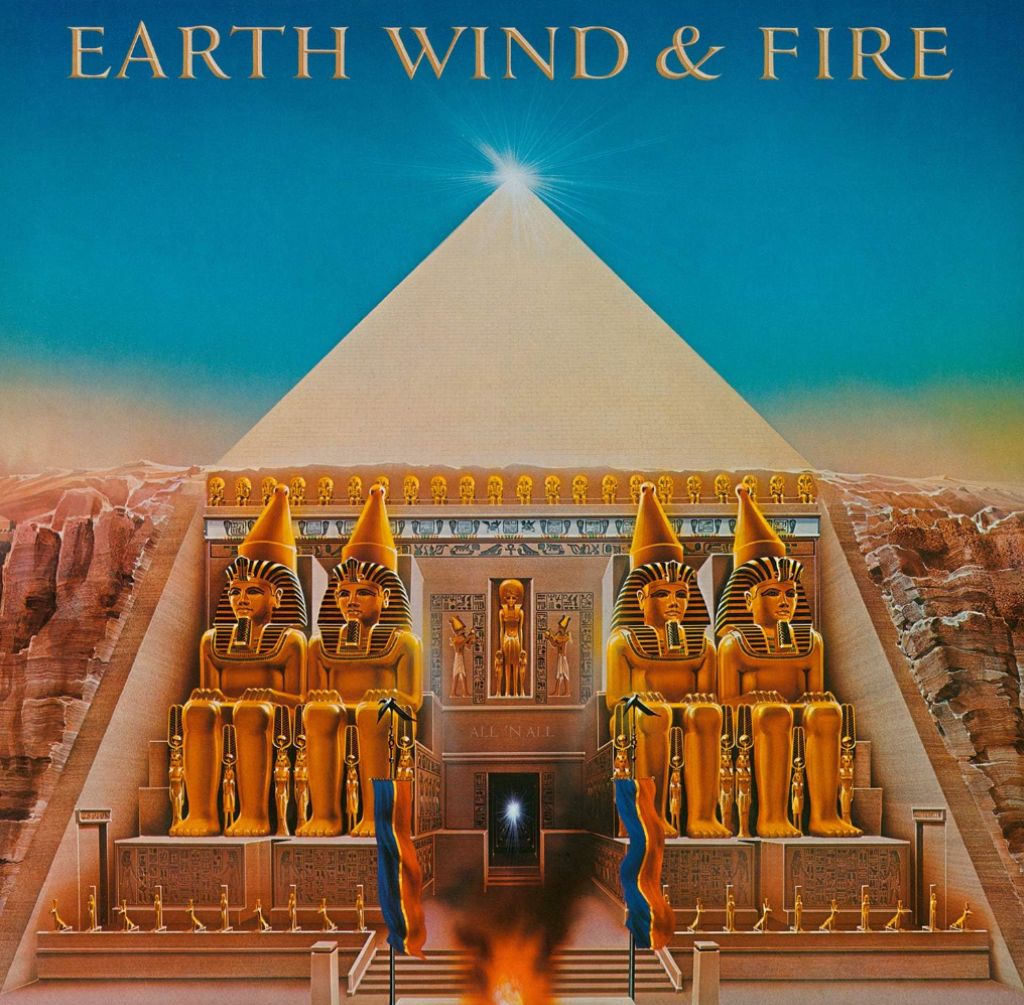
All ‘n All is the definitive statement of Earth, Wind & Fire’s ‘cosmic funk’ era. Maurice White merged Egyptian mysticism with sophisticated jazz-fusion and driving disco, creating a spiritual, high-gloss masterpiece. From the intricate vocal arrangements of ‘Fantasy’ to the explosive brass on ‘Jupiter’, the album showcased a band at their technical and creative peak, proving that funk could be both musically complex and globally accessible.
Key Track: Fantasy

If 1977 punk had a poet laureate of the gutter, it was Richard Hell. Blank Generation is a jagged, intellectual, and rhythmically complex record that sounds nothing like the ‘three-chord’ stereotypes of the era. Robert Quine’s innovative, dissonant guitar work remains some of the most influential in the history of alternative rock. The album is a jittery, self-aware document of New York City’s nihilism, delivered with a fashion sense and lyrical bite that influenced everyone from Malcolm McLaren to the post-punk movement that would follow just a year later.

Bill Withers had an uncanny ability to make the profound feel conversational. Menagerie is a warm, funky, and impeccably produced slice of 70s soul. It features a more ‘uptempo’ feel than his earlier, sparser work, leaning into the light-funk textures of the late Seventies. Withers’ voice is a comforting, soulful anchor throughout, tackling themes of domestic bliss and urban life with his signature honesty. It’s an album that feels like a humid afternoon in the city, proving that soul music didn’t need pyrotechnics to be deeply moving and rhythmically infectious.
Key Track: Lovely Day

The debut LP from art punkers Wire stripped punk down to its molecular level. While peers leaned into stadium-sized anthems, Wire delivered 21 tracks of minimalist precision, some lasting less than a minute. By removing all ‘rock’ artifice –solos, choruses, and wasted breath – they created a jagged, conceptual masterpiece. Pink Flag wasn’t just a punk record; it was the birth of post-punk, proving that brevity and structural discipline could be far more radical than volume.
Key Track: 1 2 X U

Costello arrived as the „angry young man“ of the New Wave, blending the snarl of punk with the sophisticated songwriting of Buddy Holly and the Brill Building. Produced by Nick Lowe and backed by the band Clover, his debut is a lean, biting collection of songs about revenge, guilt, and sexual frustration. Costello’s wordplay was lightyears ahead of his peers, and his ability to pack complex emotions into two-minute pop nuggets was startling. It signalled the moment that punk’s energy was beginning to be harnessed by a new breed of literate, melodic songwriters.
Key Track: Alison

Before and After Science is the ultimate bridge between Brian Eno’s art-pop past and his ambient future. The album is a masterpiece of two halves: ‘Before’ features jagged, hyper-rhythmic ‘propulsion’ tracks, while ‘After’ dissolves into serene, pastoral soundscapes. By merging precision-engineered funk with ethereal textures, Eno perfected the studio-as-instrument approach, creating a visionary template for the experimental pop and ambient movements of the 1980s.
Key Track: By This River

In a year of new sounds, the master of the Delta blues proved he was still the king. Produced by Johnny Winter, Hard Again was a massive comeback that stripped away the psych-rock experiments of Muddy’s late-60s work in favour of raw, distorted, and incredibly loud Chicago blues. The band – including James Cotton on harmonica – sounds like a freight train, and Muddy’s voice has a weathered, commanding authority. It was a reminder that the heavy sounds the punks were chasing had been perfected decades earlier in the South Side of Chicago.
Key Track: Mannish Boy

Nile Rodgers and Bernard Edwards didn’t just make disco; they made ‘Sophistifunk’. Their debut album arrived in 1977 with a revolutionary sound built around Rodgers’ ‘chucking’ guitar and Edwards’ melodic, propulsive basslines. It was music that felt aspirational – chic, cool, and rhythmically airtight. While disco was often dismissed as disposable, Chic brought a level of musicianship and minimalist arrangement that influenced everything from hip-hop to Duran Duran. This album proved that the dance floor could be a space for high-art precision and undeniable groove.
Key Track: Everybody Dance

While the Sex Pistols were nihilistic, The Clash were idealistic. Their debut is a high-voltage blast of social commentary, tackling unemployment, racism, and the boredom of the UK suburbs. It’s a ‘ragged’ record, filled with amateurish energy and undeniable conviction. Joe Strummer’s bark and Mick Jones’ hooks created a template for ‘punk with a purpose’. It also hinted at their future versatility by including a cover of Junior Murvin’s ‘Police and Thieves’, showing that even in their earliest days, The Clash were looking toward the global sounds of reggae.
Key Track: White Riot

Following the claustrophobic chill of The Idiot, Iggy Pop retreated to Berlin with David Bowie to record this explosive, rhythm-heavy celebration of survival. Lust for Life is a leaner, more ‘rock’ record than its predecessor, driven by the thunderous Sales brothers’ rhythm section. It captures Iggy at his most charismatic and revitalized, blending the raw power of The Stooges with a new, sophisticated pop sensibility. It’s an album about kicking drugs and embracing the chaos of the city, delivered with a predatory, street-walking swagger that only the ‘Godfather of Punk’ could command.
Key Track: Lust for Life

Songs from the Wood represents the pivotal shift into Tull’s folk-rock trilogy, marking a retreat from the sprawling prog-concepts of the early seventies toward an earthy, pastoral sound. Influenced by Ian Anderson’s move to a farm in Buckinghamshire, the album celebrates British folklore and pagan tradition. By integrating intricate acoustic arrangements with David Palmer’s lush portative organ and synthesizers, the band successfully married virtuosic prog rock with the rhythmic vitality of traditional English folk.
Key Track: Songs from the Wood

The pinnacle of ‘studio perfectionism’. On Aja, Walter Becker and Donald Fagen abandoned the idea of a ‘band’ entirely, employing a revolving door of the world’s finest session musicians to achieve a flawless blend of jazz, rock, and pop. The production is so pristine it became the industry standard for testing hi-fi equipment. Lyrically, it is a cynical, literate tour of the L.A. underworld, but musically, it is as smooth as silk. It’s an album that shouldn’t work – it’s too cold, too technical – yet the songwriting is so strong that it remains a sophisticated masterpiece.
Key Track: Peg

The debut album from Surrey, UK’s Stranglers remains punk’s most musically sophisticated outlier. While the scene prioritized ‘Year Zero’ amateurism, The Stranglers brought virtuosity, age, and a menacing, organ-driven growl. Dave Greenfield’s psychedelic keyboards and Jean-Jacques Burnel’s distorted, lead-bass sound created a dark, intellectual aggression that felt distinct from the three-chord standard. The Stranglers were the bridge between pub-rock’s grit and post-punk’s brooding complexity, proving punk could be both dangerous and complex.
Key Track: (Get A) Grip (On Yourself)

An intellectual antidote to punk’s raw nihilism. Emerging from the NYC art-school scene, Talking Heads replaced leather jackets with polo shirts and jagged distortion with clean, interlocking rhythms. David Byrne’s anxious, high-strung vocals and the rhythm section’s proto-funk precision created a jittery, ‘nervous’ energy that essentially birthed the Post-Punk and New Wave movements, proving that rock could be brainy, danceable, and deeply unsettling.
Key Track: Psycho Killer

Released in 1977, Street Survivors was the definitive realization of Skynyrd’s triple-guitar attack, revitalized by new recruit Steve Gaines. It showcased a band pivoting toward a more sophisticated, soul-infused rock sound on tracks like ‘That Smell’. Tragically, the album was released just three days before the plane crash that killed Ronnie Van Zant and the Gaines siblings, forever cementing this high-energy masterpiece as their final, poignant statement.
Key Track: What’s Your Name

10. Yes – Going for the One
Released in 1977, Going for the One is the moment Yes successfully navigated the shift from the sprawling, cosmic excess of the early seventies into the sharper, more direct energy of the late-decade rock landscape. After the complex density of Relayer, the band retreated to Montreux, Switzerland, to craft a record that balanced their signature technical virtuosity with a newfound sense of joy and accessibility.
It is a landmark entry for two reasons: the return of keyboard wizard Rick Wakeman and the band’s embrace of a more ‘organic’, live-in-the-studio sound. From the boogie-rock slide guitar of the title track to the majestic, pipe-organ-driven spiritualism of the 15-minute epic ‘Awaken’, the album remains the ultimate bridge between their symphonic past and a leaner, more vibrant future.
Key Track: Awaken

In 1977, the future arrived on a train. Kraftwerk moved further away from their Krautrock roots toward a pristine, synthesized pop that would change music forever. Trans-Europe Express is a concept album about the elegance of European travel, defined by its hypnotic, mechanical rhythms and beautiful, cold melodies. It is a foundational text for hip-hop (famously sampled by Afrika Bambaataa), techno, and every synth-pop band of the 80s. While rock was looking back to the blues, Kraftwerk was looking toward a digital world, creating a hauntingly beautiful aesthetic that still feels modern.
Key Track: Trans-Europe Express

The most dangerous album of the decade. Despite the media circus surrounding them, the Pistols’ only studio album is an incredibly well-constructed, heavy-hitting rock record. Produced by Chris Thomas, it possesses a ‘wall of sound’ guitar density that few other punk bands could match. Johnny Rotten’s sneering, distinctive delivery remains the definitive voice of a generation’s frustration. It’s an album that sought to destroy the music industry while simultaneously perfecting the art of the rock-and-roll provocation. It remains the essential ‘Big Bang’ of the punk era.
Key Track: Anarchy in the U.K.

The centrepiece of Bowie’s visionary ‘Berlin Trilogy’, “Heroes” is a breathtaking blend of art-rock, ambient electronics, and pop. With Brian Eno’s ‘oblique’ strategies and Robert Fripp’s soaring, feedback-driven guitar work, Bowie captured the haunted, divided energy of the Cold War city. The title track remains one of the greatest anthems in rock history – a song about finding a moment of triumph in the face of inevitable collapse. The album’s second half, filled with dark, instrumental soundscapes, pushed the boundaries of what a ‘pop star’ was allowed to do, influencing the entire post-punk and electronic movement.
Key Track: „Heroes“

Amidst the rise of punk, Pink Floyd released their most aggressive and cynical work. Loosely based on Orwell’s Animal Farm, the album is a scathing critique of the social and political decay of 1970s Britain. The tracks are long, guitar-heavy, and filled with Roger Waters’ biting lyrics. It lacks the ‘spacey’ warmth of Wish You Were Here, replacing it with a cold, industrial grit. It’s a massive, towering achievement of progressive rock that felt surprisingly aligned with punk’s ‘no future’ sentiment, delivered with the technical mastery only Floyd could provide.
Key Track: Dogs

The Stranger comes early on one of rock’s most remarkable album runs, and it’s the best of them. is the definitive Billy Joel statement, balancing his Tin Pan Alley sensibilities with gritty New York rock. Under Phil Ramone’s crisp production, Joel finally captured his touring band’s live energy, elevating vignette songwriting into high art. From the cinematic sprawl of ‘Scenes from an Italian Restaurant’ to the soulful introspection of ‘Vienna’, the album is a flawless, nine-track masterpiece of melody and working-class storytelling.
Key Track: Scenes From An Italian Restaurant

Recorded in London following an assassination attempt in Jamaica, Exodus is a spiritual and political landmark. Side One side features heavy, militant reggae tracks, while the second side is filled with some of the most beautiful love songs ever recorded. It is a masterpiece of production, blending traditional roots-reggae with a slick, international pop sensibility that made Marley a global superstar. It’s an album of profound resilience and faith, standing as a peaceful, rhythmic counterpoint to the aggressive turmoil of 1977 London.
Key Track: Exodus

While the rest of the 1977 class was either screaming or dancing, Television was rewriting the rules of the electric guitar. Marquee Moon is a sprawling, cinematic, and utterly unique masterpiece that bridges the gap between punk’s raw energy and the improvisational complexity of jazz. Tom Verlaine and Richard Lloyd’s interlocking guitar lines are telepathic, creating a crystalline ‘forest’ of sound. It is an album that feels both urban and ethereal, intellectually rigorous yet emotionally resonant. It is the greatest record of 1977 because it sounds like nothing that came before it and remains a blueprint for everything ‘alternative’ that came after.
Key Track: Marquee Moon

1977’s commercial juggernaut is also its most perfect pop statement. Recorded as Fleetwood Mac’s two central couples were spectacularly falling apart, Rumours turned internal soap opera into universal art. Every track is a pristine masterpiece of melody and harmony, masking deep emotional pain with sunny, West Coast production. It is a rare example of a blockbuster album that is also critically irreproachable. From the stomp of ‘The Chain’ to the ethereal ‘Dreams’, it is a flawless document of interpersonal warfare and the resilience of the human heart, defining the FM Rock era forever.
Key Track: Dreams

While the flashy aggression of punk defined 1977’s headlines, David Bowie’s Low defined its future. Emerging from a soul-crushing low ebb in Los Angeles – marred by a severe cocaine addiction and near-psychosis – Bowie retreated to Europe to exorcise his demons. The result was a radical, two-faced masterpiece: Side A features paranoid, fractured avant-pop, while Side B unfolds into haunting, cinematic ambient soundscapes.
Collaborating with Brian Eno and producer Tony Visconti, Bowie pioneered a new musical language, famously utilizing the Eventide Harmonizer to create a pitch-shifted drum sound that became the foundational blueprint for post-punk and 80s new wave. Visionary and uncompromising, Low proved that an established superstar could shatter pop conventions and still create the decade’s most enduring, atmospheric art.
Key Tracks: It’s such an album of two sides, we’re picking two. For the upbeat art pop thrills, Sound and Vision. For the space and atmosphere, Warszawa. But we also love this:
Mon 28 September 2026

From opposite sides of the Atlantic, both Henry Rollins and Billy Idol were struck by the same 1977 punk LP.
They’re different characters. Rollins, a veteran of the DC hardcore scene, fronted Black Flag’s heyday and forged a subsequent career by branching out into acting, TV personality, and public speaker for hire. Idol was a member of the so-called Bromley Contingent who waded through purist sneers as the singer for Generation X’s punk-pop polish. This was before he was riding the second British invasion as a solo star and standing as one of the premier poster boys of the MTV era, of course.
Yet the pair were united by an essential ’77 release. There’s plenty to choose from. Naturally, most will gravitate to Never Mind the Bollocks, Here’s the Sex Pistols, the UK’s totemic soundtrack to the Year Zero insurrection that likely will endure as punk’s textbook LP. However, The Clash, The Damned, The Stranglers, Wire, Richard Hell and The Voidoids, Dead Boys, and The Saints all released key debuts in the year that punk exploded in earnest.
Yet the album that united Rollins and Idol came from four leather-clad kids from Queens: the Ramones. There’s always been a debate as to when punk was first sparked. Quite rightly, British fans will point to the bristling pub rock scene as a crucial influence, while Americans will highlight the earlier garage rock cohort populating New York and Detroit’s febrile underground. However, the timelines don’t lie. As the Sex Pistols tore their first live set in November 1975, the Ramones had already played a set at CBGB over a year earlier.
While the Sex Pistols detonated a sharp, potent flashbang to the punk climate, the Ramones imbued their songbook with a deeper reverence for the old songbooks of their youth: Beatlemania and the British invasion, bubblegum pop, Phil Spector’s hit factory, and girl-group sass all coloured the Ramones’ stripped-down attack right up until 1996’s ¡Adios Amigos! farewell.
Of the band’s early albums, both Rollins and Idol agreed as to the ‘Blitzkrieg Boppers’’ finest hour, the latter listing his selected Ramones LP on a 2005 Entertainment Weekly feature and Rollins telling all to Rocker two years earlier.
“I think Rocket to Russia was probably their most concise statement,” Rollins said. “Tommy [Ramone], the drummer, is one of the best rock drummers ever. He is an amazingly natural musician. That album, to me, was the best of their ideas. And that was Johnny’s [Ramone, the guitarist] favourite Ramones album. The rest are quite nice. I have a very soft spot for the first one as well. I have all the Ramones albums. The ones with Tommy, basically the first four, are really magical.”
Our own Ramones ranking may slightly disagree, but it’s true that the Ramones’ third LP effort benefited from sharper popcraft and a beefier sonic flourish, courtesy of Sire’s loose purse strings. The Ramones debut stands as a punk landmark, while Leave Home strangely lacks the same hooky song standard they’d established for themselves.
But Rocket to Russia cements the Queens band as not just punk icons but sensational popsmiths; ‘Sheena Is a Punk Rocker’, ‘Cretin Hop’, and ‘Teenage Lobotomy’ are grade-A gems of the maddeningly difficult craft of the simple song.

THE RAVEN, BLACK AND WHITE OR NO MORE HEROES — WHICH ALBUM WINS?

On this date in 1979, THE STRANGLERS released their fourth studio album, THE RAVEN — the record that carried them beyond the narrowing boundaries of punk and into a wider world of travel, politics, mythology and increasingly adventurous studio work (Sep 21, 1979).
Only sixteen months separated The Raven from Black and White, but the distance between them feels considerably greater. The Stranglers had never fitted comfortably within punk’s approved dimensions: Jean-Jacques Burnel’s bass was too dominant, Dave Greenfield’s keyboards too elaborate, Hugh Cornwell’s writing too wilfully contrary and Jet Black’s musicianship too grounded in an earlier tradition. By 1979, they were looking beyond the British scene that had first made their name. Touring had taken them through Europe, Japan, Australia and the United States; Cornwell and Burnel had also undertaken work outside the band. Those experiences fed into an album concerned with foreign cities, political regimes, cultural unease and the disorientating effects of travel. The Raven was not a sudden transformation so much as the point at which several strands in their music were finally allowed to spread out.
The title supplied an organising image. In Norse mythology, Odin’s ravens Huginn and Muninn fly across the world before returning with reports of what they have witnessed. The Stranglers cast themselves in a similar role: four travellers sending back observations that might be fascinated, suspicious, contemptuous or deliberately provocative. It was an ambitious premise, but the album avoided becoming weighed down by it. The songs remained compact and melodic, even when their subjects included Australian politics, upheaval in Iran, heroin, ritual death and genetic engineering.
Some of the material was developed during a working stay near Perugia in Italy, although the participants later remembered the details differently. Burnel recalled Baroque Bordello emerging there, while Cornwell believed more of the album took shape during the visit. That uncertainty is preferable to the neater legend of four musicians arriving with a plan and returning with a completed masterpiece. The Raven grew less tidily from touring, individual experiments, rehearsals and ideas carried between countries. Its international character was not decorative; it came directly from what the band had been seeing and discussing.
There was also an important change in the studio. Martin Rushent had produced the first three Stranglers albums, but the band’s later account was that he disliked the direction suggested by Meninblack and chose not to continue. Alan Winstanley, who had already worked with the group as an engineer, instead co-produced The Raven with the band. Recording took place during June 1979 at Pathé-Marconi in Paris, a decision Burnel later said was influenced partly by the punitive British tax rates of the period, before Winstanley and Steve Churchyard mixed the album at AIR Studios in London. The resulting sound is recognisably that of The Stranglers, but with more air around the instruments and a far greater willingness to disturb the established balance between them. Keyboards become atmosphere rather than decoration, the bass regularly assumes the lead role, percussion is treated as colour as well as rhythm, and Cornwell’s guitar appears where it can make the greatest impact rather than filling every available space.
Longships opens the record with little more than a minute of synthesised wind, keyboards and ceremonial rhythm before flowing into the title track. The Raven is one of Burnel’s most assured lead vocals, stern but not inflexible, while Greenfield’s keyboards and Black’s controlled drumming give the song an unusual sense of forward movement. Dead Loss Angeles then removes conventional guitar altogether and builds its metallic churn around two bass parts played by Burnel and Cornwell. Inspired by their impressions of Los Angeles, it is hostile, funny and physically oppressive, less a portrait of the city than a record of the group’s reaction to it. Ice draws on Japan, discipline and ritualised death, its rigid construction making the title feel almost literal, while Baroque Bordello loosens the record with an ornate, faintly decadent swing. These songs do not attempt to blend their locations into a single worldview. The attraction lies in their abrupt changes of temperature: Parisian studio polish rubbing against road-worn suspicion, fascination repeatedly turning into unease.
The album’s most inviting melody belonged to Duchess. Released as the first single and backed with Fools Rush Out, it reached No. 14 in Britain and gave The Raven an accessible entrance without misrepresenting the record around it.
Duchess sounds effortless, but Cornwell’s lyric is oblique enough to prevent it settling into an ordinary romantic song. Its promotional film placed the band in choirboy outfits inside a church, drawing objections and, according to the band’s later recollection, limiting its exposure. The performance was cheeky rather than vicious, but The Stranglers’ reputation ensured that even a bright pop single arrived with friction attached. Nuclear Device offered much less room for misunderstanding. A satirical attack on Queensland premier Joh Bjelke-Petersen and the authoritarian reputation of his government, it was released after the album under the fuller title Nuclear Device (The Wizard of Aus) and reached No. 36. Its blunt chorus and political caricature are balanced by a carefully controlled arrangement; what can sound like a straightforward shout-along is held together by Black’s measured drumming and Greenfield’s stabbing keyboards.
Shah Shah a Go Go responds to the Iranian Revolution with the band’s familiar mixture of newsprint immediacy, black humour and provocation. It should not be treated as a balanced account of Iran’s upheaval, nor does it pretend to be one. The Stranglers were seizing on personalities, images and rapidly changing events, compressing them into a theatrical piece of pop. That instinct continues into (Don’t Bring) Harry, although the volume and manner change completely. “Harry” was slang for heroin, and the song approaches addiction through weariness and apprehension rather than outlaw glamour. Its restrained vocal and stately piano give it a bruised atmosphere quite unlike the band’s more aggressive records. It later became the centrepiece of the Don’t Bring Harry EP, accompanied by Burnel’s Crabs, Cornwell and Robert Williams’ Wired, and a live version of In the Shadows. The EP reached No. 41 and took the group back to Top of the Pops, despite being an unusually subdued release for that setting.
Meninblack is stranger still. Its processed voices, electronic pulse and deliberately awkward humour introduce the mysterious figures who would occupy the band more fully on 1981’s The Gospel According to the Meninblack. Heard in 1979, it must have resembled an interruption from another record; in retrospect, it is the doorway to their next phase. Genetix closes the album with Greenfield’s treated vocal circling around images of scientific interference and replication while Black negotiates a rhythm far more intricate than the band’s supposed punk limitations allowed. There is no comforting resolution. The music appears to examine itself, repeat its components and gradually disappear into the machinery.
The packaging extended the album’s travelling mythology. Early UK copies carried an expensive three-dimensional lenticular image of a raven, often loosely described as a hologram, which was replaced by a conventional photograph on later pressings. The band’s archive later recalled that a stuffed raven had been sent to Japan so the dimensional image could be created. On the back, the group appeared beside the replica Viking longship Hugin at Pegwell Bay in Kent. The setting held a personal connection for Jet Black, who had witnessed the vessel’s arrival there as a schoolboy in 1949. John Pasche coordinated the sleeve design, with different photographers and designers contributing to the outer and inner artwork. It was unusually elaborate packaging for a group still regularly filed under punk.
Released by United Artists, The Raven reached No. 4 on the UK Albums Chart, remained on the chart for eight weeks and earned a Gold certification. It received no standard American release at the time; US listeners instead got IV in 1980, a compilation combining five Raven tracks with singles and other material. Contemporary British reviews were divided but serious. Sounds regarded it as the group’s best album to that point, while the NME was more sceptical of its lyrical preoccupations but acknowledged the precision and intricacy of the playing.
The Raven did not discard the force of the first three albums. It redistributed it. The aggression was still present, but it now emerged through unusual arrangements, clashing perspectives and the tension between four musicians becoming less interested in what their audience expected of them. By the time Genetix folds back into its own repetitions, the route towards The Gospel According to the Meninblack has already opened.
Decade 77-87 – a grown up disco: new wave, punk, postpunk, goth & indie
Mon 23 February 2026 23:30, UK

A good film can turn into a great one when the right soundtrack is employed, so when you take a Jonathan Glazer movie, something that’s always going to be great, and add a song as addictive as ‘Peaches’ by The Stranglers to its opening sequence, what you’ll find is pure brilliance.
Glazer’s movies have always ensured a terrific audio experience; the soundtrack to Under the Skin by Mica Levi is hauntingly beautiful (I’ve certainly put housemates ill at ease when they’ve heard it emanating from underneath my bedroom door), while The Zone of Interest won an Oscar for its harrowing sound design, which communicated the horrors of the Holocaust.
Sexy Beast, Glazer’s debut film, is considerably different from the sci-fi leanings of his Scarlett Johansson film or the historical drama that informs his most recent project, which saw him draw from the British tradition of crime flicks, casting Ray Winstone as his central character. Set in Spain, we meet Gal as he sunbathes by his swimming pool with little to do, which is manned by a rather young boy who works for the former criminal, turning a crispy golden brown as he reclines in the heat, covered only by a pathetic excuse for swimming bottoms, and he likes it that way.
The sky is bright, with a view of Spain stretching in the distance. This is what many people dream of, retiring to somewhere like the Costa del Sol and doing absolutely nothing while other people run after you. The opening sequence, which plays out to the entirety of The Stranglers’ 1977 song, is the perfect introduction to the film, establishing Gal’s situation and the subsequent destruction of his peace and comfort.
As that recognisable and slightly mischievous bassline begins, we’re met with Winstone’s middle-aged tanned body, which looks like it would be painful to touch. Now I’m not saying that his body is a sore sight, but it’s certainly a contrast to the lyrics that make up ‘Peaches’, a leering song that many accused of misogyny upon its release due to its voyeuristic point of view.
The song takes the perspective of a man ogling girls on the beach, “peaches” presumably referring to the female arse cheeks he is fixated on. “Strolling along, minding my own business/ Well, there goes a girl and a half/ She’s got me going up and down,” Hugh Cornwell sings, and put that alongside Winstone, his cheeks barely contained in his bright orange speedos, and you get quite the humorous contrast, perfectly setting the tone for this dark comedy.
Not much happens during this opening sequence at the start, where Winstone does a lot of lying around, bossing his young pool boy, while shots of the hot sun and a mysterious woman driving to the villa are spliced in between. Thus, the driving bassline of the Stranglers’ track keeps a level of momentum and intrigue going, culminating in several indicators that things are about to go tits up.
Not only does he reach for an icy towel to cool off his nether region (a potentially sunburned penis can definitely be taken as a warning sign), but then a massive rock falls, seemingly out of nowhere, and crashes into the pool, which has love heart designs at the bottom of it. This huge splash is the ultimate symbol of impending doom, which soon arrives in the form of a former criminal associate, Don, played terrifyingly by Ben Kingsley.
Before we’re pulled into a total world of chaos and violence, though, we get to enjoy a brief moment of this Briton abroad choosing to soak up the sun, and ‘Peaches’ lends the film an initial burst of tongue-in-cheek humour, which soon descends into much darker territory. After I first watched Sexy Beast, I was humming the bassline for days, mumbling the chorus as I washed dishes and got ready for work, and by letting the entire song play out over the opening sequence, we become fully immersed in Gal’s world, which is about to completely change, and it’s one that Glazer ensures we don’t forget anytime soon.
Како осмислити на занимљив начин наставу физике у гимназији, користећи модерне технологије
n. The act of looking at antipodean life from the perspective of an Englishman living in a dream-like state
Muzički Davitelji iz Gilforda (Engleska)
Muzički Davitelji iz Gilforda (Engleska)
Muzički Davitelji iz Gilforda (Engleska)
Punk, Metal, Rock Music Live Reviews & Interviews
Muzički Davitelji iz Gilforda (Engleska)
a cesspit full of info about the Stranglers
Muzički Davitelji iz Gilforda (Engleska)
Muzički Davitelji iz Gilforda (Engleska)
Muzički Davitelji iz Gilforda (Engleska)
ИКТ у школи и настави
Muzički Davitelji iz Gilforda (Engleska)
Muzički Davitelji iz Gilforda (Engleska)
Muzički Davitelji iz Gilforda (Engleska)
Занимљиви материјали за ученике и професоре
Лични сајт посвећен популаризацији науке
Muzički Davitelji iz Gilforda (Engleska)
Otro sitio más de WordPress.com
Muzički Davitelji iz Gilforda (Engleska)
Muzički Davitelji iz Gilforda (Engleska)
Muzički Davitelji iz Gilforda (Engleska)
Muzički Davitelji iz Gilforda (Engleska)
Blog sadrži teme iz astronomije i srodnih prirodnih nauka. Uživajte u svetu astronomije i prirode koja vas okružuje.
Muzički Davitelji iz Gilforda (Engleska)